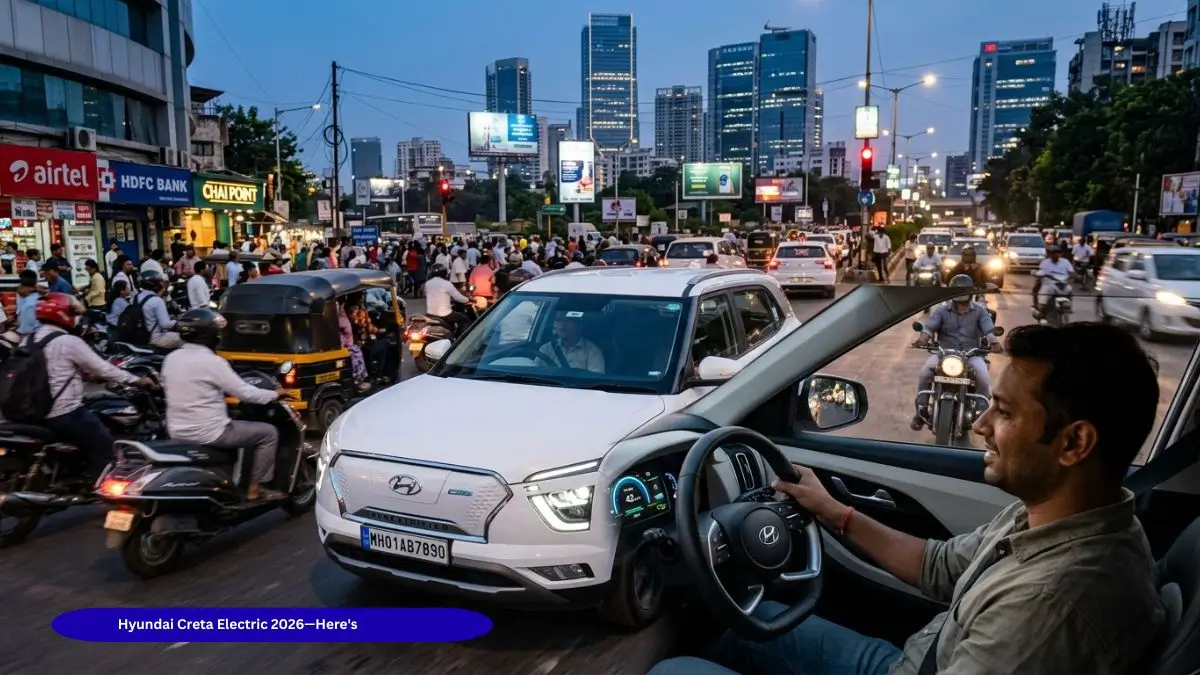
Last month, my cousin called me in a absolute panic. He’s a software engineer based in Pune, and his monthly fuel bill for a daily 45 km office commute had just touched ₹11,000. He wanted to jump into the electric vehicle world immediately but had a hard ceiling on his budget: ₹10 lakhs on the road.
“Should I buy right now, or wait?” he asked.
I told him the exact same thing I am going to tell you: Wait just a little bit if you can.
The Indian automotive landscape is shifting at breakneck speed. While car buyers were previously forced to shell out ₹15 lakh plus for a decent electric car, the budget EV segment is about to explode. Major manufacturers are moving away from treating electric vehicles as luxury novelties and are finally building practical, everyday machines for the budget-conscious Indian family.
If you are looking to switch to green mobility without breaking the bank, this breakdown covers the most anticipated upcoming budget EV cars in India, what to actually expect from them, and how to avoid the classic mistakes first-time EV buyers make.
The Landscape: Why Budget EVs under ₹10 Lakhs are Changing
For the longest time, buying an affordable electric car meant making massive compromises. You either had to choose a quirky, ultra-mini car that felt like a glorified golf cart, or a bare-bones hatchback with a real-world range that barely got you out of the city limits.
Things look completely different now. Battery manufacturing costs have dipped globally, and manufacturers are using dedicated electric platforms rather than just stuffing batteries into old petrol car chassis. This means upcoming low budget EV cars will offer significantly improved cabin space, better safety features, and smarter thermal management systems tailored for harsh Indian summers.
Upcoming Budget EV Cars in India to Watch For
The upcoming pipeline shows that manufacturers are aggressively targeting the sub-₹10 lakh sweet spot. These are the models generating the most realistic buzz on the testing tracks and auto expos.
1. Hyundai’s Compact Electric SUV (Inspired by the Inster)
Hyundai has been testing a heavily camouflaged micro-SUV on Indian roads, heavily inspired by their international Inster EV. This is directly aimed at breaking Tata’s dominance in the entry-level space.
- Expected Price: ₹9.5 Lakh to ₹12 Lakh
- Target Segment: Micro-SUV / Urban Crossover
- The Inside Track: Unlike a simple converted petrol car, this vehicle takes advantage of a smart interior layout. Expect Hyundai’s signature premium cabin feel, a dual-screen dashboard setup, and a real-world range hovering around 260–280 km on a single charge. It is designed specifically to challenge the Tata Punch EV.
2. VinFast VF3
The Vietnamese EV giant VinFast is establishing a massive manufacturing footprint in India, and their absolute entry card is going to be the boxy, rugged-looking VF3.
- Expected Price: ₹8 Lakh to ₹10 Lakh
- Target Segment: 2-Door Micro-SUV
- The Inside Track: If you love the muscular, upright stance of a classic off-roader but need something small enough to squeeze into tight metro parking slots, this is it. It features a high 191 mm ground clearance to tackle broken city roads and monsoon potholes. While it only sports two side doors, the interior is surprisingly practical for a small family’s daily errands.
3. MG Wuling Binguo EV
Following the quirky success of the ultra-compact Comet, MG is bringing a more traditional, family-friendly hatchback based on the global Wuling Binguo platform.
- Expected Price: ₹8.5 Lakh to ₹11 Lakh
- Target Segment: Premium Budget Hatchback
- The Inside Track: This car adopts a completely different design aesthetic—flowing, retro-chic curves reminiscent of classic European cars. Unlike the Comet, the Binguo is a proper four-door hatchback with a spacious boot and a much larger battery pack, making it a direct head-to-head competitor for the market-leading Tata Tiago EV.
Current Realities: The Benchmarks You Can Buy Right Now
If your current car is breaking down and you absolutely cannot wait for upcoming models, the market already has a few strong entry-level options that set the benchmark these upcoming budget EV cars have to beat.
| Model | Starting Price (Ex-Showroom) | Key Strengths | Best Suited For |
| MG Comet EV | ₹6.31 Lakh | Incredibly easy to park, quirky tech, rock-bottom running costs | Solo commuters and secondary city runabouts |
| Tata Tiago EV | ₹6.99 Lakh | Traditional hatchback look, familiar driving dynamics, great safety tech | Small families looking for a seamless petrol-to-EV switch |
| Tata Punch EV | ₹9.69 Lakh | High driving position, solid build quality, excellent rough-road capability | Buyers wanting an SUV feel under a strict budget |
A Note on the 2026 Upgrades: Tata recently updated the Tiago EV with 40% faster DC fast-charging capabilities and a standard 6-airbag safety kit, meaning the baseline for entry-level electric cars is now incredibly high.
4 Costly Mistakes to Avoid as a First-Time Budget EV Buyer
When transitioning from a petrol or diesel car to an electric vehicle, looking only at the price tag and the brochure can lead to major regrets. These are the four most common mistakes I see buyers make in my inbox every single week.
1. Falling for the “Claimed Range” Trap
If an upcoming low budget EV car brochure claims a range of 315 km, do not plan a 300 km road trip. That figure is calculated under ideal laboratory conditions (MIDC cycles).
- The Reality Check: In the real world, running the air conditioning on high during a hot afternoon, driving bumper-to-bumper in traffic, or speeding on the highway drops that number significantly. Always subtract 25% to 30% from the manufacturer’s claimed range to get your true, stress-free driving distance.
2. Not Auditing Your Home Electrical Setup First
A budget EV doesn’t need a massive commercial charger, but it does require a dedicated, properly earthed 15A socket near your parking spot.
- Lesson Learned: I’ve seen people buy an electric hatchback only to realize their apartment complex’s resident welfare association (RWA) doesn’t allow running charging cables to the parking basement, or that their home grid needs an expensive load upgrade from the electricity board. Sort out your home charging logistics before placing a booking deposit.
3. Ignoring the Battery-as-a-Service (BaaS) Fine Print
Many car brands are lowering upfront costs by selling cars under a BaaS model. This makes the vehicle look incredibly affordable initially (sometimes dropping the price by over ₹2 lakhs), but you pay a fixed per-kilometer rental fee for the battery pack.
- The Strategy: Calculate your monthly running distance. If your daily usage is quite low, buying the car and battery outright usually makes more financial sense over a 5-year ownership period than paying ongoing battery rentals.
4. Overpaying for Public DC Fast Chargers
Public fast chargers are fantastic for emergency top-ups, but relying on them for your primary charging needs ruins the financial benefit of owning an electric vehicle. Public charging rates are significantly higher than home electricity tariffs. To truly extract the lowest running costs, plan your lifestyle so that 90% of your vehicle’s charging happens overnight at home while you sleep.
Step-by-Step: How to Determine If a Budget EV Fits Your Lifestyle
Before you put your name on a waiting list for any upcoming small budget EV car, run this quick, logical audit to make sure it actually works for your specific use case.
Is your daily commute under 120 km?
  ├── NO  --> Stick to a Hybrid or Diesel for now.
  └── YES --> Do you have a dedicated parking spot with a 15A power plug?
                ├── NO  --> Check if your office has reliable charging infrastructure.
                └── YES --> A budget EV will save you thousands every month.
- Track Your Real Daily Mileage: For one full week, log your exact odometer readings. If your daily running is consistently under 100-120 km, a budget EV is an absolute goldmine for savings.
- Calculate Your Break-Even Point: Take the price premium of the electric car over an equivalent petrol hatchback. Divide that by your estimated monthly fuel savings. For most high-mileage urban drivers running over 1,200 km a month, an electric vehicle pays back its price premium within 2.5 to 3 years.
- Map Your Frequent Road Trips: Download apps like PlugShare or StatIQ. Look at the highway routes you frequently take for weekend family trips. Are there operational DC fast chargers every 60–80 km? If yes, even a budget electric vehicle can comfortably handle occasional out-of-town trips.
The Verdict: Should You Wait for the Upcoming Lineup?
If you already have a perfectly functioning petrol vehicle and want to switch purely to lower your monthly running costs, holding out for the late 2026 launches makes a ton of sense. The upcoming entry-level electric cars from Hyundai, MG, and VinFast will bring much-needed competition to the market, which naturally translates to better features, more aggressive pricing, and better deals for consumers.
However, if your current commuter car is failing or you are burning an unsustainable amount of money on petrol every single day, don’t stall your life waiting for future concepts. Current offerings like the updated Tata Tiago EV or the MG Comet are highly evolved, thoroughly tested machines that will start slashing your transportation bills from day one.
Determine your core daily mileage, figure out your home charging situation, and pick the vehicle shape that fits your family’s needs. The era of affordable, practical electric mobility in India is no longer a distant dream—it’s parked right outside.

Murali is the founder and editor of TrendTorq.com. He holds a background in Automobile Engineering and has worked as a hands-on automobile technician, giving him a practical understanding of how vehicles actually perform in the real world — not just on paper. He started TrendTorq in 2026 to bridge the gap between complex automotive and technology information and the everyday buyer who just wants clear, honest answers. His articles cover car reviews, EV guides, smartphone comparisons, and buying advice for the Indian and global market. When he’s not writing, he’s researching the next vehicle or gadget worth your money.