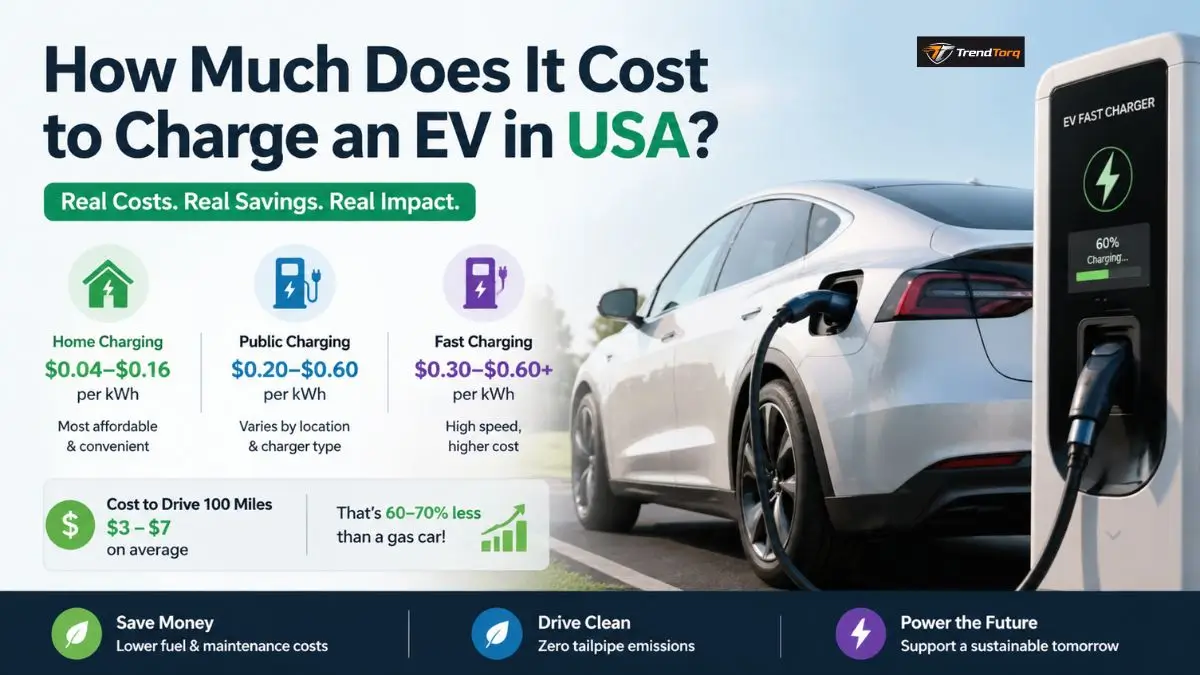
Electric vehicles (EVs) have become a popular and eco-friendly choice for many car owners across the United States. As the demand for EVs grows, understanding the costs associated with charging these vehicles has become a critical concern. In this comprehensive guide, I will walk you through everything you need to know about EV charging cost in USA. From how much it costs to charge at home to the prices at public stations, we will explore the variables that can influence your overall charging expenses.
What Impacts EV charging cost in USA?
When considering the EV charging cost in USA, several factors come into play, including where you charge, your vehicle’s battery size, and the time it takes to charge. Understanding these variables can help you estimate the overall cost of powering your electric car.
1. Home Charging vs. Public Charging: EV charging cost in USA
The most significant cost factor is whether you are charging at home or using public stations. Charging at home is typically cheaper, as you only need to pay for electricity, whereas public charging stations often include additional service fees, depending on the provider.
2. Charging Speed:
The cost can vary depending on how quickly you charge your EV. Fast chargers, such as DC fast chargers, are often more expensive than Level 1 or Level 2 chargers. However, they allow you to charge your car much faster.
EV charging cost in USA Per Month
One of the most frequent questions EV owners have is, “How much does it cost to charge an electric car at home per month?” On average, it costs between $30 to $60 per month to EV charging cost in USA, depending on how much you drive and your local electricity rates.
How to Calculate Monthly Charging Costs at Home
To calculate your monthly charging costs, follow these steps:
- Determine the kWh (kilowatt-hour) your EV consumes per mile: Most EVs consume about 0.25 kWh per mile.
- Calculate the total miles you drive per month.
- Multiply the kWh per mile by the total miles driven to get the total energy consumption in kWh.
- Multiply the kWh consumption by your local electricity rate to get the estimated cost.
Tesla EV Charging Cost in the USA
If you’re a Tesla owner, you’re probably wondering about the Tesla EV charging cost in the USA. Tesla owners can charge at home using a standard wall outlet or a Tesla-specific home charger, both of which tend to be more affordable than public charging stations. Charging your Tesla at home typically costs around $0.13 to $0.20 per kWh, depending on your location and electricity plan.
However, if you choose to use Tesla’s Supercharger network, the price may be higher, ranging from $0.25 to $0.35 per kWh. While Superchargers offer fast charging, they come at a premium cost.
How Much to Charge an Electric Car at a Fast Charging Station
When using a fast charging station, the EV charging cost in USA per hour can be significantly higher. Typically, fast charging stations charge between $0.25 to $0.50 per minute, depending on the provider and location. This means that if your car takes about 30 minutes to charge, you might end up paying between $7.50 to $15.00 for a full charge.
How Fast Charging Affects Your Costs
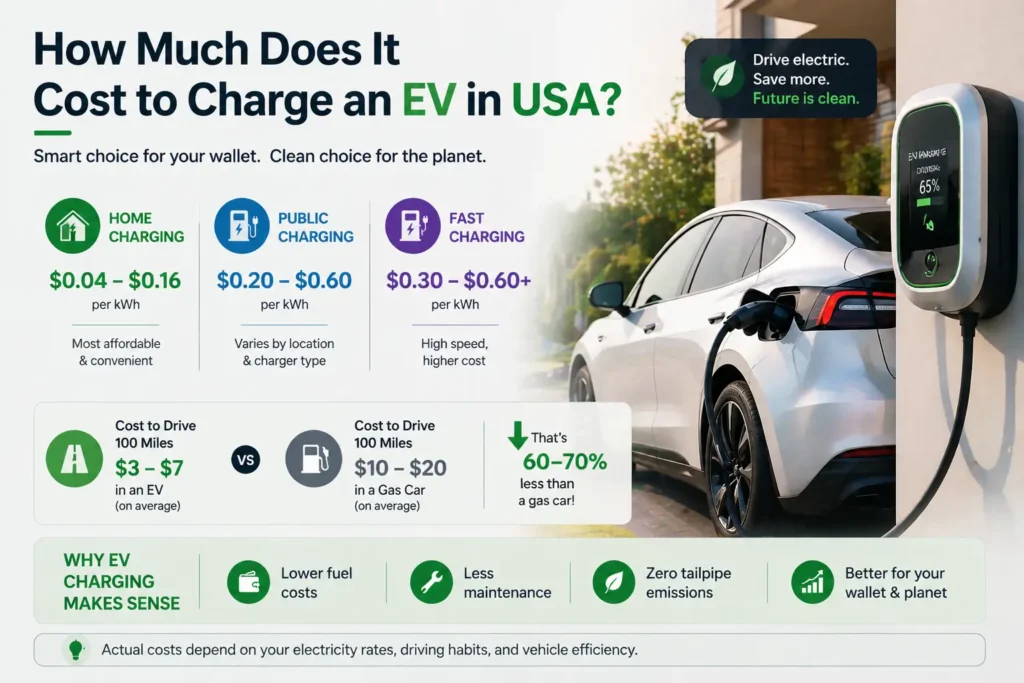
While fast charging is a convenient option, it is important to note that it costs more than regular home charging. However, it can be necessary if you’re in a hurry or if you’re traveling long distances and can’t afford to wait hours for a regular charge.
Do You Have to Pay to Charge Your Electric Car at a Charging Station?
Many people ask, “Do you have to pay to charge your electric car at a charging station?” The short answer is yes. While there are some public charging stations that offer free charging, most will require you to pay, either by the hour, per kWh, or via a membership or subscription model. It’s essential to check the charging station’s pricing model before plugging in to avoid any surprises.
EV charging cost in USA Per Mile
Another critical factor to consider is how much it costs to drive your EV per mile. Typically, the EV charging cost in USA per mile is $0.04 to $0.10, depending on your vehicle’s efficiency and local electricity rates. For instance, a vehicle that consumes 0.25 kWh per mile at an average rate of $0.12 per kWh will cost around $0.03 per mile to operate.
How to Calculate Your EV’s Cost Per Mile
- Determine the energy consumption of your vehicle in kWh per mile.
- Multiply the energy consumption by your local electricity rate.
- This gives you the cost per mile to operate your vehicle.
EV Charging Cost Calculator
Results:
Common Misconceptions About EV charging cost in USA
There are several common misconceptions about EV charging cost in USA that can lead to confusion. Let’s clear them up:
- Charging an EV is always expensive: While public fast charging stations are more costly, charging at home is very affordable, especially with lower residential electricity rates.
- EVs are always cheaper to operate than gas-powered cars: While EVs are cheaper in terms of maintenance and fuel, upfront costs and the cost of home charging infrastructure (like a Level 2 charger) can add up.
- Public charging stations are always expensive: Not all public charging stations are expensive. Many are affordable, and some even offer free charging, particularly in certain urban areas or retail locations.
EV vs. Gas-Powered Car: A Cost Comparison
When choosing between an electric vehicle (EV) and a gas-powered car, it’s essential to compare various factors beyond just the sticker price. Here’s a breakdown of the key cost differences:
1. Initial Purchase Price
- EVs: While EVs often have a higher upfront cost compared to traditional gas-powered cars, the price gap is narrowing, especially with more affordable models like the Chevrolet Bolt EV and Nissan Leaf. The federal tax incentives (up to $7,500) and state-level rebates can significantly reduce the initial purchase price of an EV.
- Gas-Powered Cars: Traditional cars are generally less expensive than their electric counterparts. However, the savings made on the initial purchase often get offset by the higher long-term fuel and maintenance costs.
2. Fueling Costs
- EVs: As mentioned earlier, charging an EV typically costs around $0.10 to $0.30 per kWh, with costs varying depending on where you charge (home or public stations). The cost to drive an EV 100 miles is typically between $3 and $6, making it significantly cheaper than a gas-powered car in terms of energy costs.
- Gas-Powered Cars: Gas prices fluctuate, but on average, it costs about $10 to $15 to drive 100 miles in a standard gasoline-powered car. For high-efficiency vehicles like hybrids, this cost can be lower, but still generally more expensive than driving an EV.
3. Maintenance Costs
- EVs: EVs require less maintenance compared to gas cars because they have fewer moving parts. There’s no need for oil changes, and brake wear is reduced thanks to regenerative braking. The estimated annual maintenance cost of an EV is generally around $300 to $500.
- Gas-Powered Cars: Gas vehicles require more frequent maintenance, such as oil changes, air filter replacements, and exhaust system checks. The average annual maintenance cost for a gas-powered car ranges from $700 to $1,000.
4. Resale Value
- EVs: Historically, EVs have had lower resale values, primarily due to concerns over battery life and the rapid pace of technological advancements. However, as electric vehicles become more mainstream, the resale value of EVs is improving.
- Gas-Powered Cars: Traditional cars generally have a higher resale value, mainly because of their longer track record and more widespread market. However, they will eventually face depreciation as the demand for EVs rises and governments continue to push for eco-friendly alternatives.
5. Environmental Impact
- EVs: One of the biggest advantages of driving an electric vehicle is the reduced environmental impact. EVs produce zero tailpipe emissions, making them much cleaner for the environment. The overall environmental benefits depend on how the electricity is generated. In regions where renewable energy sources are used, EVs are even more eco-friendly.
- Gas-Powered Cars: Gas vehicles emit CO2 and other pollutants, contributing to air pollution and climate change. While some newer models are more efficient, they still cannot match the environmental benefits of EVs.
6. Tax Incentives and Subsidies
Gas-Powered Cars: There are few, if any, subsidies for purchasing traditional gas-powered vehicles. However, some governments offer tax incentives for purchasing hybrid vehicles, which use both gas and electricity
EVs: Several federal, state, and local incentives are available to help offset the cost of EVs. These include tax credits, rebates, and even perks such as access to carpool lanes. Federal tax incentives can be as high as $7,500, and some states offer additional benefits.
Recovery Timeline and What to Expect in the Future
As you continue to use your EV, you’ll likely notice fluctuations in your charging costs based on seasonal changes, local electricity rates, and the increasing availability of public charging stations. Over time, as charging infrastructure improves and more efficient battery technologies emerge, charging an electric car will become even more affordable and convenient.
Submit Your Story
We want to hear from you! Share your experience with EV charging cost in USA in the comments section below. Have you found ways to save on charging costs? What challenges have you faced with public or home charging? Your insights could help others on their EV journey.
How This Article Was Created
Here’s the revised short paragraph with the relevant links included:
For accurate information on EV charging cost in USA, gas prices, and electric vehicle savings, you can refer to trusted sources like the U.S. Department of Energy (DOE), which provides detailed insights into EV charging infrastructure and costs. The Energy Information Administration (EIA) offers up-to-date gas price data, while Tesla outlines charging costs for their vehicles. Additionally, the California Public Utilities Commission (CPUC) shares programs aimed at reducing EV charging expenses, and Energy.gov provides information on federal tax incentives for EV buyers. These resources help you make informed decisions about EV savings and costs.
In conclusion, EV charging cost in USA can vary greatly depending on where and how you charge your electric vehicle. By understanding the different factors that influence these costs, you can make informed decisions that help you save money while enjoying the benefits of driving an electric car. Whether you’re charging at home or on the go, knowing your options can make your EV experience more affordable and enjoyable.
FAQ
- How much does it cost to charge an EV in the USA?
Charging an EV in the USA typically costs between $0.10 and $0.30 per kWh, depending on whether you’re charging at home or at a public charging station. The cost of home charging averages around $30 to $60 per month, depending on your driving habits and local electricity rates. - Is EV charging free in the USA?
While some locations offer free EV charging, such as certain public stations, retail centers, or workplace charging stations, most public charging stations require payment. Typically, they charge per kWh or per minute. - Why was I charged $50 by Electrify America?
Electrify America charges for EV charging based on factors like location, charging speed, and time spent at the station. The $50 charge could be due to high usage rates, a combination of service fees, and charging duration, especially at fast-charging stations. Always check the pricing structure before charging. - Which is the cheapest EV in the USA?
The cheapest EV in the USA is the Chevrolet Bolt EV, starting around $26,500 before incentives. It offers a range of up to 259 miles on a full charge, making it a budget-friendly choice for many EV buyers. - How much does it cost to do 100 miles in an electric car?
On average, it costs between $3 to $6 to drive 100 miles in an electric car, depending on the vehicle’s efficiency and the local electricity rate. More efficient EVs, like the Tesla Model 3, can lower the cost to around $3 for 100 miles.