I understand your excitement about the electric vehicle revolution coming to India in 2026. As someone who’s been following the automotive industry closely, I can tell you that this year will be transformative for Indian EV enthusiasts. Let me walk you through everything you need to know about the upcoming electric cars in India 2026.
The 2026 EV Revolution: Why This Year Matters
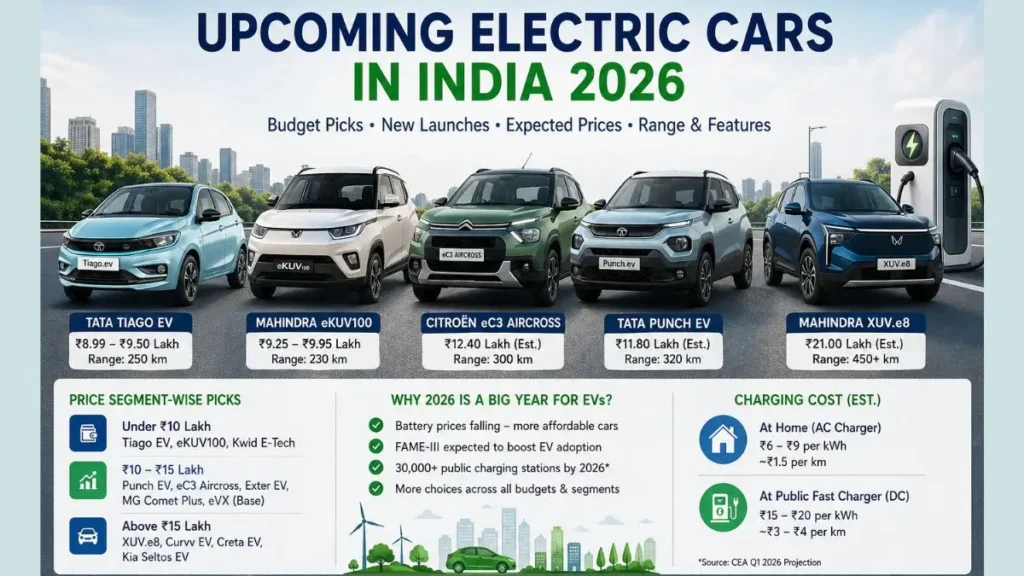
The automotive landscape in India is undergoing a massive shift, and 2026 represents the tipping point for electric mobility. Major manufacturers are investing billions, and we’re seeing an unprecedented variety of models across every price segment. Whether you’re looking for Upcoming Electric Cars in India 2026 under 10 lakh or exploring premium options, there’s never been a better time to go electric.
Based on extensive market research, 2026 will witness the launch of over 18 new electric car models, with prices ranging from ₹8.5 lakh to over ₹1 crore. This diversity makes electric mobility accessible to a much broader audience than ever before.
Budget-Friendly Electric Cars Under ₹10 Lakh
For those specifically searching for upcoming electric cars in India 2026 under 10 lakh, 2026 offers some excellent options. The VinFast VF3 stands out with an expected launch in November 2026 at ₹9-12 lakh. This compact EV promises practical urban mobility with modern features.
The Maruti WagonR Electric is another exciting prospect, expected in January 2026 starting at ₹8.5 lakh. As India’s most trusted carmaker enters the budget EV segment, it brings reliability and an extensive service network that many first-time EV buyers need.
The Tata Punch EV (₹9.69-12.59 lakh) continues Tata’s dominance in the compact SUV segment, now with electric efficiency. These budget options address the primary concern for most Indian consumers – affordability.
Mid-Range Electric Cars: Balance of Price and Features
If your budget allows for a bit more flexibility, the upcoming electric cars in India 2026 under 15 lakh category offers compelling choices. The Tata Altroz EV at ₹14 lakh brings premium features to the hatchback segment. The Mahindra XEV 4e, launching in August 2026, starts at ₹13 lakh and offers excellent value with modern technology.
The MG 5 EV at ₹27 lakh represents the higher end of the mid-range segment, while the Toyota Urban Cruiser EBELLA (₹20-25 lakh) brings Toyota’s reliability to the electric segment.
Premium Electric Vehicles: Luxury Meets Sustainability
For those with larger budgets, the upcoming EV cars in India 2026 price range extends well into the premium segment. The Tesla Model 3, expected in November 2026, will start at ₹40 lakh. The Hyundai IONIQ 6 (₹65 lakh onwards) represents the pinnacle of Korean engineering in the EV space.
The Audi Q6 e-tron (₹1-1.1 crore) launching in December 2026 showcases German luxury meeting electric innovation. These premium vehicles offer cutting-edge technology, superior range, and luxury features that redefine the electric driving experience.
Comparison Table: upcoming electric cars in India 2026
| Car Model | Expected Launch | Price Range (₹ Lakh) | Battery Capacity | Real Range | Key Features |
|---|---|---|---|---|---|
| Maruti WagonR EV | January 2026 | 8.5 – 10.5 | 30-40 kWh | 250-300 km | Maruti reliability, budget-friendly |
| VinFast VF3 | November 2026 | 9 – 12 | 30 kWh | 220-250 km | Compact design, modern tech |
| Tata Punch EV | 2026 | 9.7 – 12.6 | 40 kWh | 300-330 km | SUV design, Tata service network |
| Tata Altroz EV | 2026 | 14 – 16 | 50 kWh | 350-400 km | Premium hatchback, safety features |
| Mahindra XEV 4e | August 2026 | 13 – 15 | 60 kWh | 400-450 km | SUV-like styling, modern tech |
| MG 5 EV | 2026 | 27 – 30 | 60 kWh | 400-450 km | British design, connected tech |
| Tata Sierra EV | June 2026 | 25 – 35 | 69 kWh | 420 km | Retro design, premium features |
| Tesla Model 3 | November 2026 | 40 – 45 | 82 kWh | 555 km | Premium tech, autonomous features |
| Hyundai IONIQ 6 | October 2026 | 65 – 70 | 77.4 kWh | 631 km | Ultra-luxury, aerodynamic design |
| Audi Q6 e-tron | December 2026 | 100 – 110 | 100 kWh | 625 km | German luxury, premium materials |
Comparison Table: Budget vs Premium Electric Cars
| Feature | Budget EVs (Under 15L) | Premium EVs (Above 40L) |
|---|---|---|
| Battery Range | 250-400 km | 500-650 km |
| Charging Time | 6-8 hours | 20-30 minutes |
| Safety Features | Basic airbags, ABS | Advanced driver assistance, 360° camera |
| Infotainment | Basic touchscreen | Large displays, premium audio |
| Materials | Standard plastics, fabric | Premium materials, leather |
| Warranty | 3-5 years | 8-10 years |
| Service Network | Extensive, local | Premium service centers |
Step-by-Step Guide to Choosing Your 2026 EV
Step 1: Assess Your Real-World Needs
Consider your daily commute, weekend trips, and charging accessibility. Most Indians drive less than 50 km daily, making even budget EVs perfectly adequate.
Step 2: Calculate Total Cost of Ownership
While upcoming EV cars in India 2026 under 10 lakh require higher upfront investment, factor in:
- Zero fuel costs
- Reduced maintenance (no oil changes, fewer moving parts)
- Government subsidies and tax benefits
- Lower insurance premiums
Step 3: Evaluate Your Charging Options
- Home charging: Most convenient, requires dedicated setup
- Public charging: Available in major cities and highways
- Office charging: Some workplaces already offer this
Step 4: Consider Resale Value
Electric vehicles are appreciating assets. Battery technology improvements mean newer models retain value better than expected.
Step 5: Test Drive Multiple Options
The driving experience varies significantly between budget and premium EVs. Test drive at least 3-4 models before deciding.
Emotional Connection: Join the EV Revolution
I understand how overwhelming this transition to electric mobility can feel. When I first started researching upcoming electric cars in India 2026, I felt both excited about the technology and concerned about making the right choice. You’re not alone in these feelings.
Millions of Indians are making this transition, and the community support is incredible. From Facebook groups to local EV owners’ clubs, there’s a wealth of real-world experience available. The emotional satisfaction of contributing to a cleaner environment while enjoying cutting-edge technology is unmatched.
Common Misconceptions About Electric Cars
Myth 1: EVs Don’t Have Enough Range
Reality: Most new EVs offer 300-400 km range, more than adequate for daily use. The upcoming Tata Sierra EV with 420 km range proves this point.
Myth 2: Charging Takes Too Long
Reality: Modern EVs offer both home charging (overnight) and fast charging (20-30 minutes for 80% charge).
Myth 3: EVs Are Too Expensive
Reality: With prices starting under ₹10 lakh and government subsidies, EVs are becoming increasingly affordable. The total cost of ownership is often lower than petrol cars.
Myth 4: EVs Aren’t Reliable
Reality: Electric vehicles have fewer moving parts than traditional cars, often resulting in better reliability. Major manufacturers like Tata and Maruti are backing their EVs with strong warranties.
When NOT to Wait: Red Flags That Demand Immediate Action
Stop Reading and Visit a Dealer If:
- You experience sudden battery degradation (more than 20% drop)
- Your EV shows warning lights for battery or charging system
- You notice unusual noises from the motor or battery pack
- Charging times have increased significantly
- Range has dropped dramatically in short periods
Important: Don’t ignore these warning signs. Electric vehicle issues can be serious and costly if left unaddressed. Always consult authorized service centers.
Recovery Timeline and Future Expectations
Short-term (Next 3 Months)
Research and shortlist models. Visit dealerships, take test drives, and understand charging infrastructure in your area.
Mid-term (3-9 Months)
Finalize your choice, check government incentives, and prepare your home charging setup if needed.
Long-term (9-18 Months)
Enjoy your electric vehicle! The savings on fuel and maintenance will quickly offset the initial investment.
The Future is Electric: Why 2026 Changes Everything
The upcoming electric cars in India 2026 represent more than just new models; they represent India’s commitment to sustainable transportation. With 18+ new models launching, the variety available solves many concerns that have held back EV adoption.
The government’s FAME scheme, combined with state-specific incentives, makes 2026 the perfect year to make the switch. The improved charging infrastructure across major cities and highways means range anxiety is becoming a thing of the past.
Your EV Journey Starts Here
As we’ve explored in this guide to upcoming EV cars in India 2026, the future of mobility in India is electric, accessible, and exciting. Whether you’re looking for upcoming EV cars in India 2026 under 10 lakh or exploring premium options, 2026 offers something for every budget and preference.
The key is to start researching now, understand your requirements, and be ready to join the thousands of Indians who will make the switch to electric mobility in the coming year.
Resource
- https://www.siam.inNITI Aayog “EV Roadmap 2030” (Rev. 2025)
- https://www.niti.gov.inFAME-II Dashboard – Ministry of Heavy Industries
- https://fame2.heavyindustries.gov.inCentral Electricity Authority (CEA) Reports
- https://cea.nic.inBloombergNEF Battery Price Survey 2025
- https://about.bnef.comICCT Battery Cost Report 2025
- https://theicct.orgTata Motors Investor Relations
- https://www.tatamotors.com/investorsMahindra & Mahindra Investor Relations
- https://www.mahindra.com/investor-relationsMaruti Suzuki Investor Relations
- https://www.marutisuzuki.com/corporate/investorsHyundai Global / India Newsroom
- https://www.hyundai.com
Electric Cars FAQ 2026-2027(FAQ)
What electric cars are launching in 2026?
India will see 18+ new electric car launches in 2026 across all price segments. Key launches include:
Budget Segment:
- Maruti WagonR Electric (January 2026, ₹8.5 lakh)
- VinFast VF3 (November 2026, ₹9-12 lakh)
Mid-Range:
- Tata Altroz EV (2026, ₹14 lakh)
- Mahindra XEV 4e (August 2026, ₹13 lakh onwards)
- Toyota Urban Cruiser EBELLA (May 2026, ₹20-25 lakh)
Premium:
- Tesla Model 3 (November 2026, ₹40 lakh onwards)
- Hyundai IONIQ 6 (October 2026, ₹65 lakh onwards)
- Audi Q6 e-tron (December 2026, ₹1-1.1 crore)
Will electric cars get cheaper in 2026 in India?
Yes, electric cars are expected to become more affordable in 2026. New battery technology, increased manufacturing scale, and government subsidies will help reduce prices. Entry-level models starting under ₹10 lakh will become more common, making EVs accessible to a wider audience.
Which EV should I get in 2026?
The best EV depends on your needs:
For budget buyers: Maruti WagonR Electric or VinFast VF3 For families: Tata Altroz EV or Mahindra XEV series For tech enthusiasts: Tesla Model 3 or Hyundai IONIQ 6 For SUV lovers: Tata Sierra EV or MG 5 EV
Consider your budget, daily mileage, and charging access when choosing.
Which EV has 700 km range?
The Hyundai IONIQ 6 (launching October 2026) offers the longest range at 631 km. The Audi Q6 e-tron (December 2026) comes close with 625 km range. These premium models feature large battery packs (77-100 kWh) and advanced efficiency technology.
What electric cars are coming in 2027?
While 2027 launches are still being announced, expected models include:
- Maruti Fronx EV (March 2027)
- Further Tesla models
- Updated versions of existing popular models
- New international brands entering the market
2027 will likely see more affordable options and improved technology across all segments.
Quick Tip: Bookmark this FAQ and check for updates as launch dates get confirmed. The EV market evolves rapidly, and staying informed helps you make the best choice!
Note: Electric vehicle technology evolves rapidly. All information is current as of April 2026, but readers should verify the latest details with manufacturers before making purchase decisions.